
New Construction Dumpster Guide for Pueblo-Area Builders
How to plan container size and swap-out schedule across a new-construction project's phases in the Pueblo area.
ReadSeasonal guide
What actually happens to a roof after a southern-Colorado hailstorm, and how to handle the tear-off debris without slowing down your insurance claim.
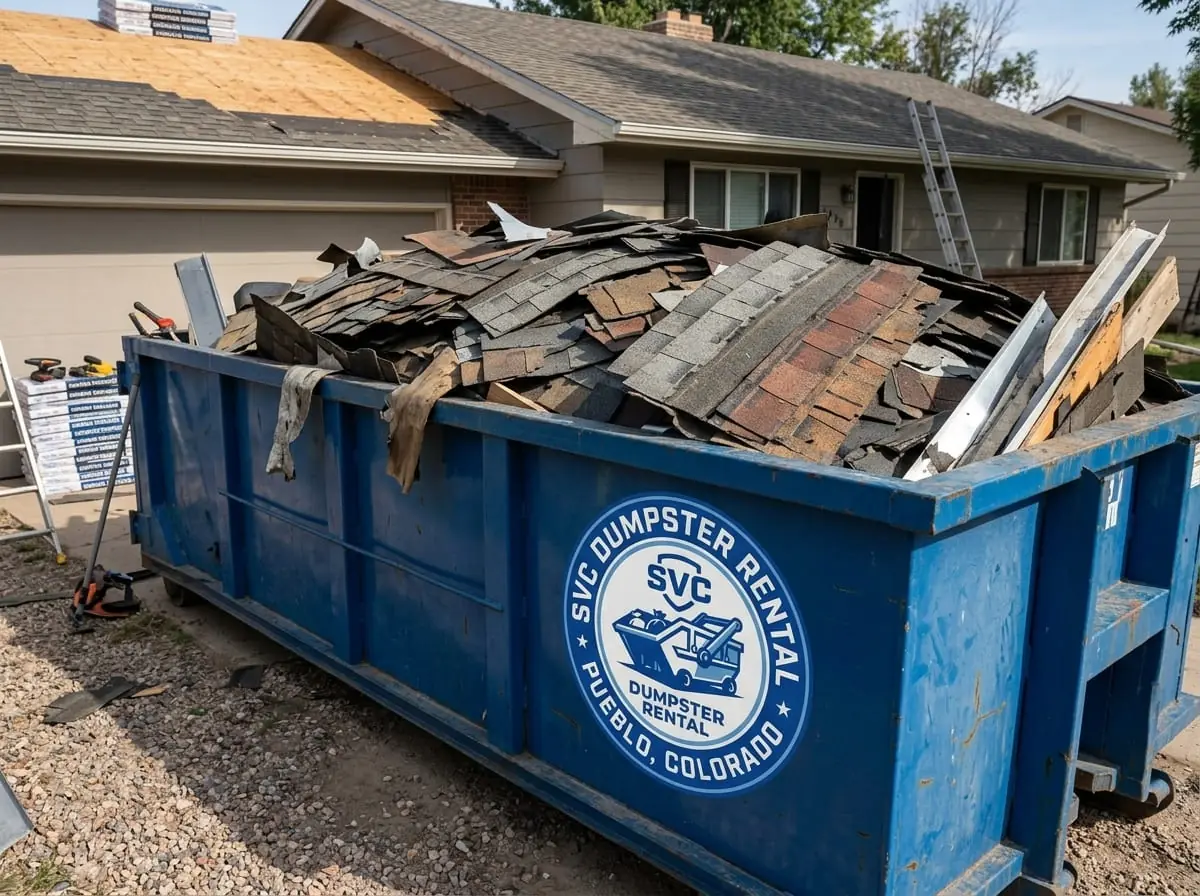
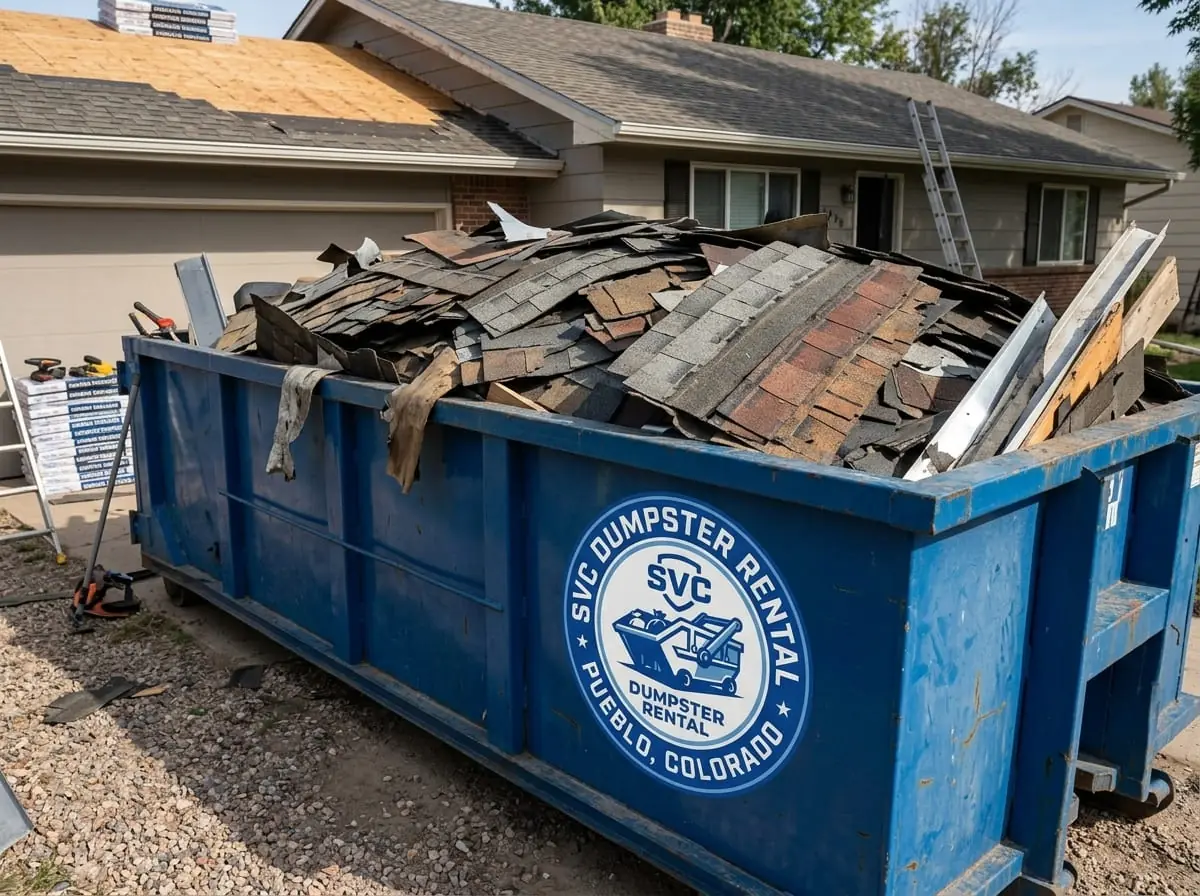
Southern Colorado sits in a real hail corridor, and a single significant storm can put dozens of roofs into tear-off within the same week or two across Pueblo and the surrounding communities. If your roof was damaged, here is what the cleanup and disposal side of that process actually looks like.
Hail large enough to crack or bruise asphalt shingles compromises the roof's water-shedding ability even where damage is not visually obvious from the ground, which is why insurance adjusters and roofing contractors usually recommend a full tear-off and replacement rather than a spot repair once hail damage is confirmed. That means significantly more debris than a routine repair — the entire shingle layer (or layers, on an older roof) comes off at once.
A single layer of asphalt shingles across an average-size roof can weigh two to three tons before underlayment and flashing are added; a second layer roughly doubles that. This weight, not the volume, is what determines the right container size — which is why we ask for roof squares and layer count rather than just "how big is the roof."
A single-layer tear-off on an average-size home usually fits a 10 yard. A double-layer tear-off, or a larger roof, typically needs a 15 or 20 yard. If decking replacement is also part of the job, size up slightly to account for that additional weight.
After a significant hail event, roofing crews and container demand both spike at once across the same neighborhoods. Book as early in your insurance claim process as you can — ideally as soon as your roofing contractor has confirmed a tear-off date — rather than waiting until the crew is on-site and ready to start.
Most straightforward hail claims do not require keeping damaged shingles after the adjuster's inspection is complete. In a disputed or more complex claim, your adjuster may want photographic documentation, or in rare cases to see material directly, before it is disposed of. Ask your adjuster what they need before your tear-off date, and we will work around that timeline if there is anything specific to set aside.
Shingles, underlayment, flashing and any damaged decking all go in the same container. Keep any hazardous material — old adhesives, sealants past their usable life — separate, and tell your roofing crew to flag anything unusual they find during tear-off.
Talk to a real person
Call (719) 504-5824 and describe the job. Flat price, stated tonnage allowance, and a delivery window on the same call.
Mon–Sat 7:00am – 7:00pm
From this guide
As soon as your roofing contractor has a tear-off date, ideally sooner. Demand spikes fast across the whole region after a significant hail event, and container availability tightens with it.
A single-layer tear-off on an average roof usually fits a 10 yard; a double layer or a larger roof usually needs a 15 or 20 yard. Tell us the square footage and layer count and we will size it correctly.
It can. Some adjusters want to see damaged material, especially in a disputed claim. Photograph the damage and ask your adjuster if anything needs to be set aside before it goes in the container.
Keep reading
How to plan container size and swap-out schedule across a new-construction project's phases in the Pueblo area.
ReadA practical, room-by-room checklist for planning a roof replacement in Pueblo, from container sizing to what to expect on tear-off day.
ReadA practical, no-pressure guide to clearing a Pueblo-area home after a loss or a move, room by room.
Read