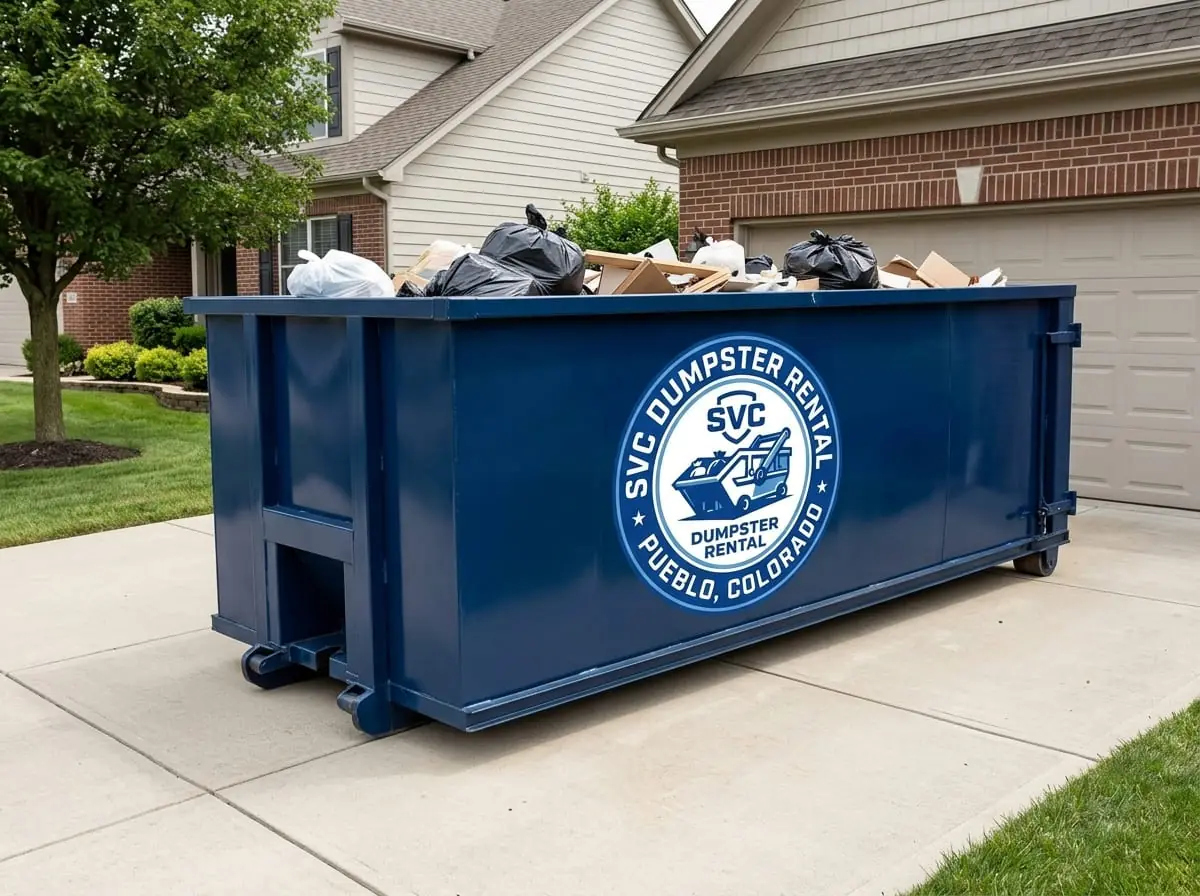

Xeriscape Yard Cleanout Guide for Pueblo, CO Homeowners
Planning a xeriscape conversion in Pueblo's high-desert climate — what actually comes out of the yard, and how to size the container for it.
ReadSizing guide
The complete sizing guide: how to pick the right container by matching your debris to the two limits that actually matter — volume and weight.
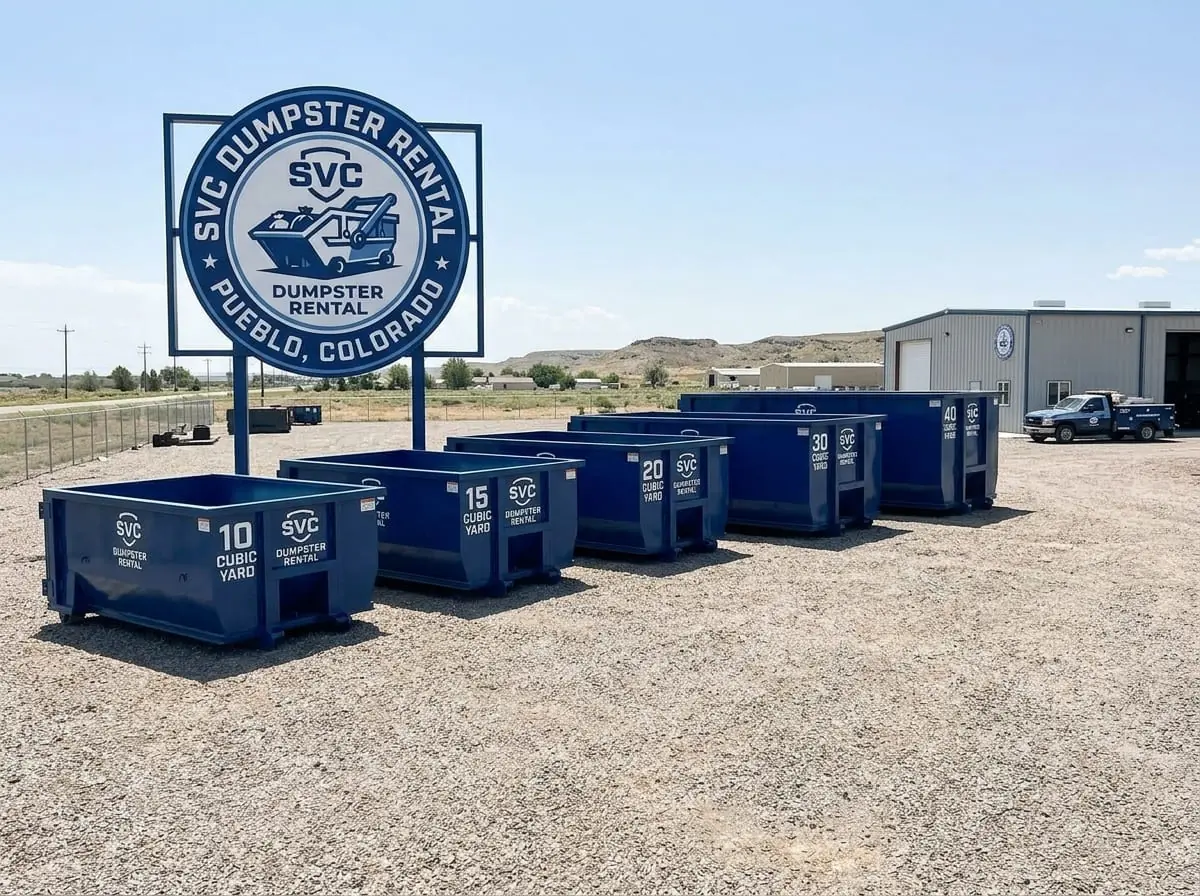
Every roll-off container has two separate limits: how much space it holds, measured in cubic yards, and how much weight it is rated to carry, measured in tons. The single most important sizing skill is figuring out which of those two limits your project will hit first — because the two mistakes cost you in opposite directions.
Bulky, light debris — furniture, cardboard, framing offcuts, general household junk — runs out of space long before it comes close to a weight limit. For these jobs, size up if you're unsure. Dense material — concrete, brick, tile, wet soil, shingles — runs out of its weight allowance while the container still looks mostly empty. For these jobs, size down and expect to pay by weight rather than by how full the box looks.
Concrete, brick, tile and sand-fill demolition; a single-layer roof tear-off; a small bathroom remodel; a one-car garage clear-out. If your project is dense rather than bulky, start here rather than assuming a bigger box is the safer choice.
A garage-plus-attic cleanout, a two-room flooring or cabinetry remodel, a double-layer roof tear-off, or a typical residential yard-waste and xeriscape tear-out all land comfortably here.
Full storm-damage roof replacements, whole-floor renovations, and three-to-four bedroom house cleanouts are the classic fits. If you're genuinely unsure which size to book, this is the reasonable default — but still describe the job on the phone so we can confirm rather than default you into the wrong size.
A whole-home gut renovation, a larger estate cleanout including outbuildings, or combined storm-debris and small structure-teardown jobs typically need this much room. It needs a longer driveway approach — confirm your site can accommodate it.
Commercial buildouts, multi-unit property cleanouts, and large-scale but low-density demolition debris are the clearest fits. It is not the safe default for a heavy load — concrete or similarly dense material should go in a smaller, weight-priced container even on a large job.
| Project | Recommended size | Why |
|---|---|---|
| Driveway concrete tear-out | 10 yard | Weight-limited, not volume-limited |
| Garage cleanout | 10-15 yard | Depends on garage size and contents |
| Full roof replacement (single layer) | 10-15 yard | Shingles are heavy per square foot |
| Kitchen remodel | 15-20 yard | Mixed cabinetry, flooring and drywall |
| Whole-house cleanout | 20-30 yard | Volume from many rooms at once |
| New-construction framing debris | 20-30 yard | Bulky but relatively light |
Describe the job, the rooms, and the type of material, and we will size it correctly based on jobs we've actually run — not a generic online chart. If it turns out too small, a swap is one phone call away.
Talk to a real person
Call (719) 504-5824 and describe the job. Flat price, stated tonnage allowance, and a delivery window on the same call.
Mon–Sat 7:00am – 7:00pm
From this guide
The 20 yard, by a wide margin. It suits most whole-room and whole-project jobs without running out of room, and still fits a standard residential driveway.
Almost never. A bigger container costs more to begin with, and if your material is heavy, the extra size does not raise your weight allowance by much — you will still pay overage on the same tonnage.
Describe the project — the rooms involved, the type of material, roughly how old the structure is — and we will size it based on similar jobs we've run. If it turns out too small, we can swap it for a larger one.
Keep reading
Planning a xeriscape conversion in Pueblo's high-desert climate — what actually comes out of the yard, and how to size the container for it.
ReadWhat actually comes out of a renovation on one of Pueblo's older CF&I steel-era homes, and how that changes the sizing math.
ReadWhat actually drives the price of a roll-off container in Pueblo, and how to avoid paying more than the job needs.
Read